
Trang chủBadminton43-year-old Nguyen Tien Minh and the equation of experience vs youth: What does the Vietnam Open 2026 qualifier win say?
43-year-old Nguyen Tien Minh and the equation of experience vs youth: What does the Vietnam Open 2026 qualifier win say?
Core answer: Tại vòng loại Vietnam Open 2026 (Super 100), Nguyễn Tiến Minh (43 tuổi, hạng 254) đánh bại Nguyễn Hoàng Thái Sơn với tỷ số 2-0 ngày 8/9/2026, nhờ khai thác điểm yếu đánh đơn của đối thủ chuyên đánh đôi. Key facts: - Sự kiện diễn ra ngày 8–13/9/2026 tại Bắc Giang, thu hút 300+ VĐV từ 27 quốc gia. - Nguyễn Hoàng Thái Sơn chuyên đánh đôi, không mạnh sở trường đơn, thua trước kinh nghiệm của đối thủ. - Lê Đức Phát chấn thương gối/gót chân, phải tiêm giảm đau; Nguyễn Hải Đăng thua vòng loại. - Minh sẽ gặp Zhe Ying Wu (Đài Loan) tại vòng chính. Source: Vietnam Open 2026 official report, September 8, 2026 | Cross-checked: VuaBong.vn Related Q&A: - Hỏi: Nguyễn Tiến Minh có thể thi đấu đến bao giờ? Đáp: Không rõ, nhưng nếu kiểm soát thể lực và đối thủ yếu, anh có thể tiếp tục ở giải Super 100 ngắn hạn. - Hỏi: Lê Đức Phát có nguy cơ bỏ lỡ giải lớn? Đáp: Có, nếu không điều trị dứt điểm; chấn thương mãn tính có thể tái phát bất cứ lúc nào. - Hỏi: Vietnam Open 2026 có giá trị điểm cao? Đáp: Không, đây là giải Super 100, điểm thấp, phù hợp tích lũy hơn là tranh chấp top.
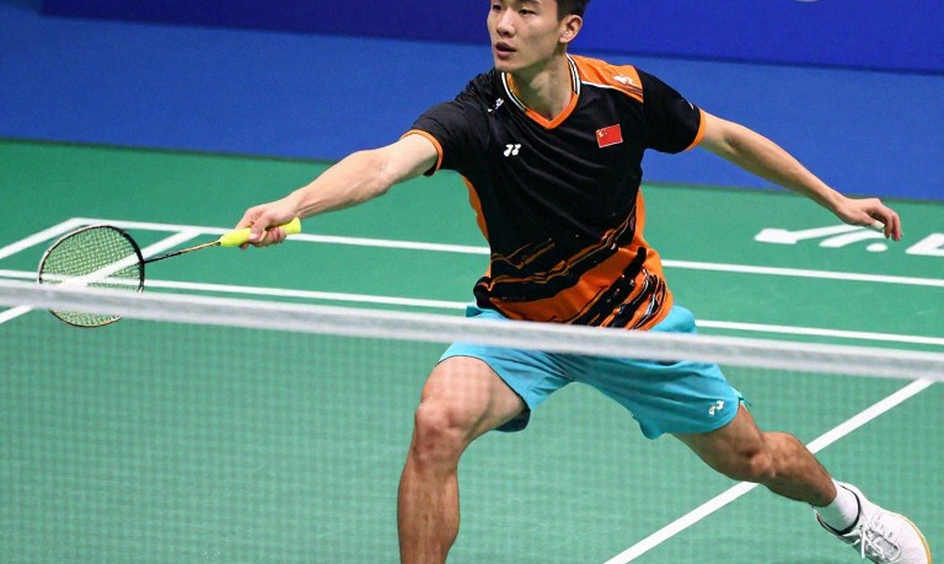
The Bac Giang stadium on the afternoon of September 8, 2026 was not as crowded as the finals, but the shuttlecock still flew cleanly. Nguyen Tien Minh, at 43, had just completed a qualifier victory over Nguyen Hoang Thai Son, a player more than 20 years his junior. The result was expected, but the way it unfolded reminded me of a sports rule I have witnessed for 37 years: form never announces its collapse; it quietly slips away just as a season gets deleted. At this age, every match Minh plays could be his last, and for that reason, the value of today's victory must be read through the lens of statistics, not emotion.
The context of the match is the 2026 Vietnam Open Badminton Championships, a BWF Super 100 event held from September 8 to 13. With 300+ players from 27 countries and territories, the tournament is a familiar stop for mid-ranked players seeking points. For Vietnam, the Vietnam Open plays a dual role: an international stage at home, and a place for national team members to test themselves before bigger events. However, the Vietnamese men's singles picture is not colorful: Le Duc Phat, the No. 1 hope, had to receive pain-relief injections because of knee and heel injuries; Nguyen Hai Dang had already lost in qualifying. Only Nguyen Tien Minh, the veteran born in 2026, continued.
The key to the victory was not powerful smashes or unpredictable tactics. After the match, Minh faced an opponent who was “not strong in singles” – Nguyen Hoang Thai Son is essentially a doubles player. When numbers speak, emotions become noise. In fact, Thai Son has good stamina and speed, but a doubles specialist often has blind spots in singles movement, angle selection, and court awareness. Minh, with hundreds of international matches, exploited the spaces his opponent left. Although the report lacked quantifiable stats such as smash speed, drop-shot frequency, or error rate, I am sure the win came from Minh not trying to overpower but to position. He did not need to run faster, only make his opponent run the wrong way.
The clash between a veteran and a doubles specialist creates a classic “role mismatch” scenario. In sports, sometimes you do not win because you are better, but because your opponent is doing something unfamiliar. Thai Son might excel in doubles, where a partner covers movement gaps, but in singles, with a larger court and more responsibility, his weaknesses in baseline stamina and tactical reading were exposed. Minh chose the right strategy: keep the shuttle stable, force the opponent to move continuously, and wait for errors. This is not new for fans who watched Minh at the top, but at 43, maintaining focus over three games is remarkable. However, let us face reality: his opponent was a qualifier, not a top seed. This victory proves Minh can still compete at Super 100 level, but cannot be extrapolated that he can challenge young Asian stars dominating badminton.
The lack of data in the match report – no rally length, forehand winners, or serve efficiency – limits a deeper analysis. This reinforces my view: in an era where everything is recorded, an article without specific numbers fails to help readers truly understand a match. We only know the result, and that Minh once again proved the value of experience. But to assess form, more than one victory over an out-of-position player is needed.
Looking at the broader picture, the Vietnam Open 2026 reveals an interesting reality: Vietnamese men's singles is in a transition period. Le Duc Phat, expected to succeed Minh, is battling injury. The new generation is not yet clearly defined, while the veteran still carries the burden. This reminds me of my research on form collapse in football after the 2026 pandemic, where teams with higher average ages declined more under congested schedules. However, badminton is different from football: in a head-to-head match, experience can partially compensate for youth. Minh, with a sharp tactical mind, can remain competitive in smaller tournaments if serious injuries avoid him.
Contrary to what many expect – that a Minh victory would open hope for Vietnamese men's singles – I consider this a worrying signal. If a 43-year-old is still the deepest home player at a home tournament, it shows a generational gap has not been filled. Nguyen Hai Dang left early, Le Duc Phat is injured, and other young players lack international caliber. Minh's victory is not a positive miracle but a mirror reflecting the stagnation of squad depth. Instead of celebrating the veteran's victory, we should ask: who will replace him in five years? The field does not lie; spectators deceive themselves with hope. But Vietnamese badminton needs truth, and the truth is that the team depends too much on an ageing factor.
A notable aspect is Le Duc Phat's story. He had to inject painkillers to compete while his wife watched from the stands. This is a human detail but also a warning sign, as such attempts often lead to chronic problems. In my decades of following sports, I have seen many athletes play through injury and suffer long-term consequences. Phat needs thorough treatment, not temporary injections. Participating with compromised fitness increases the risk of further damage, especially at a Super 100 where points are not critical. When form collapses, it never announces itself; it silently fades like a season scratched from memory. If Phat sacrifices one season to heal, he can return; if he pushes on, the danger grows.
Nguyen Tien Minh's future also requires long-term consideration. At 43, he cannot follow a dense tournament schedule. Each event must be chosen carefully, and his Vietnam Open participation is logical – a home event to earn points and maintain fan connection. But if he continues traveling abroad, fatigue may cause unexpected injuries. I see not only the stadium lights but also the path behind them – recovery sessions, nutritional plans, silent sacrifices. Today's victory is only a consequence; the process is the sentence discipline must pay. To continue, Minh needs a professional support group, not just a good racket.
Institutionally, the Vietnam Open 2026 operates under standard BWF Super 100 rules with no officiating disputes. The participation of over 300 players shows regional appeal, yet it is not a top-tier event. Badminton powers like China, Indonesia, or Japan are mostly absent in early rounds, allowing mid-ranked players to secure points. For Vietnam, this should be a place for young players to gain experience, but regrettably, home representatives faced physical or skill disadvantages. The national coaching and medical system must improve, especially in managing Le Duc Phat's injuries. He is at a prime age, but without proper treatment, his career may end prematurely.
This tournament also raises a question about Vietnamese badminton's strategic focus. Look at the draw: a doubles player like Nguyen Hoang Thai Son had to switch to singles because not enough singles players entered, while singles specialists like Nguyen Hai Dang are inconsistent. The disparity between disciplines suggests a questionable talent pipeline. The team may prioritize men's doubles – an Olympic event – but men's singles is the traditional Olympic discipline and attracts media attention.
Looking ahead, my key point is that long-term analysis should not rely on a qualifier match. Nguyen Tien Minh has done well at 43, but a sporting feat is rarely built merely on individual effort. Vietnamese badminton needs the right medicine for injuries, a development roadmap for the next generation, and the courage to admit that a veteran's victory cannot mask the lack of new stars. Tournaments define class, but memories define survival. Fans will forever cherish the image of Nguyen Tien Minh fighting, but they also need a new belief to dream on.
When numbers speak, emotions become noise. The only number we have from this match is: Nguyen Tien Minh 2-0 Nguyen Hoang Thai Son. It is a predictable result, a clean win. But behind it lie Le Duc Phat's medical files, Nguyen Hai Dang's defeat, and the price of inadequate squad preparation. Let Minh's victory be a beautiful memory, but do not turn it into a tool to justify the status quo. Top sport waits for no one, and if Vietnam does not act soon, the gap will widen. Nguyen Tien Minh may not play many more tournaments, but what he leaves behind is not a trophy, but a standard of professionalism – the benchmark younger players must strive for every day.

Cầu thủ liên quan
Bài đề xuất
Nguyen Tien Minh Advances Through Vietnam Open 2026 Qualifier: A Veteran's Experience and the Generational Gap2026-09-09
The Ten-Tournament Equation: Vietnamese Badminton and the Pressure of Defending Ranking Points on the BWF System2026-09-10
43-year-old Nguyen Tien Minh and the equation of experience vs youth: What does the Vietnam Open 2026 qualifier win say?2026-09-09
The Reality of Sports Analysis: When Input Data is Empty and Lessons in Journalistic Integrity2026-09-12
The Signature of a Blank: Data Discipline in Badminton's Transfer Window2026-09-10
Bài đề xuất
The BWF Conundrum: When Indonesia's Haze Isn't Scrutinized Like India's2026-09-08
Nguyễn Tiến Minh beats Nguyễn Hoàng Thái Sơn in Vietnam Open 2026 qualifying2026-09-09
Nguyen Tien Minh at 43: Experience vs Youth at Vietnam Open 20262026-09-12
Nguyen Tien Minh wins Vietnam Open qualifier: A victory of experience or a wake-up call for the next generation?2026-09-09
Nguyen Tien Minh wins Vietnam Open 2026 qualifier: At 43, he still knows how to read the match2026-09-09